Shaping Immunity in Early-Life with Vaccine Adjuvants
Funded by Food Allergy Fund
Dr. Jessica J. O’Konek, as Principal Investigators
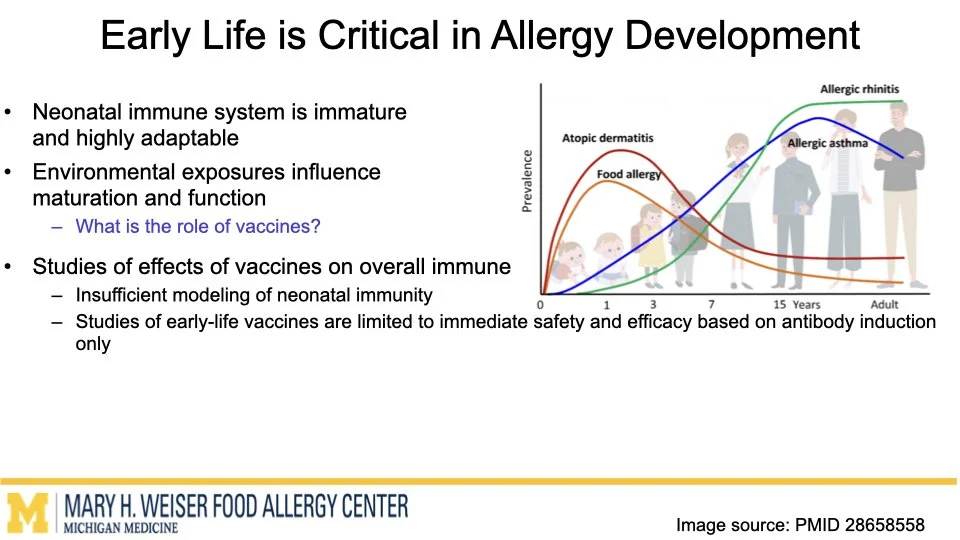
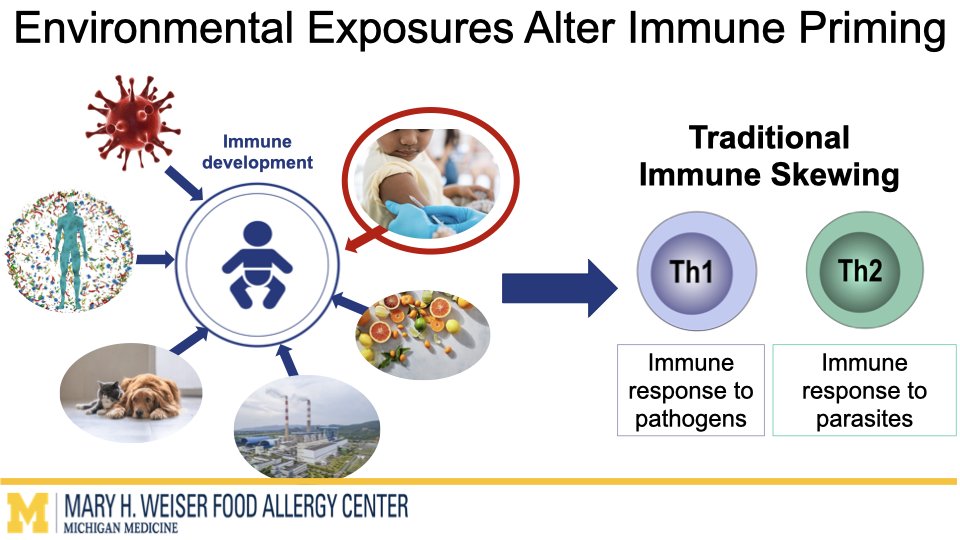
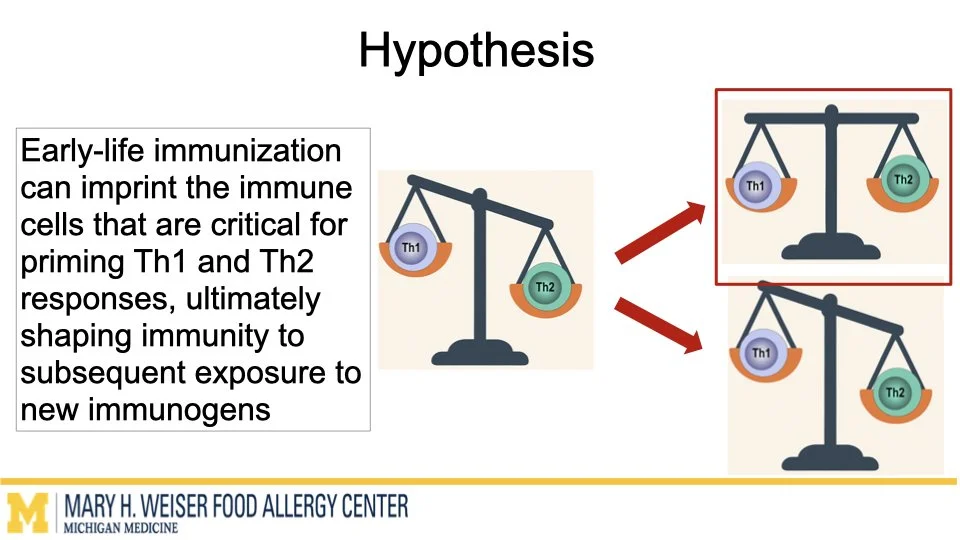
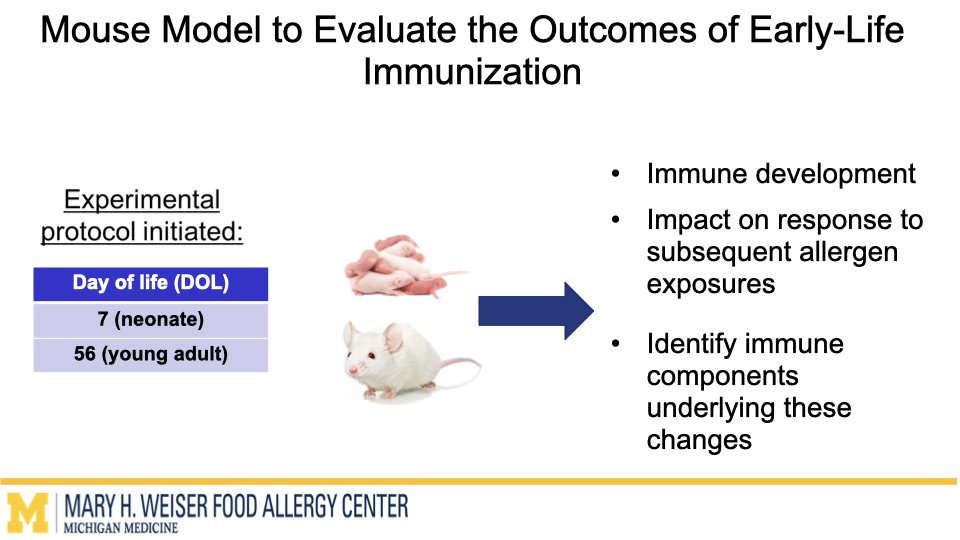
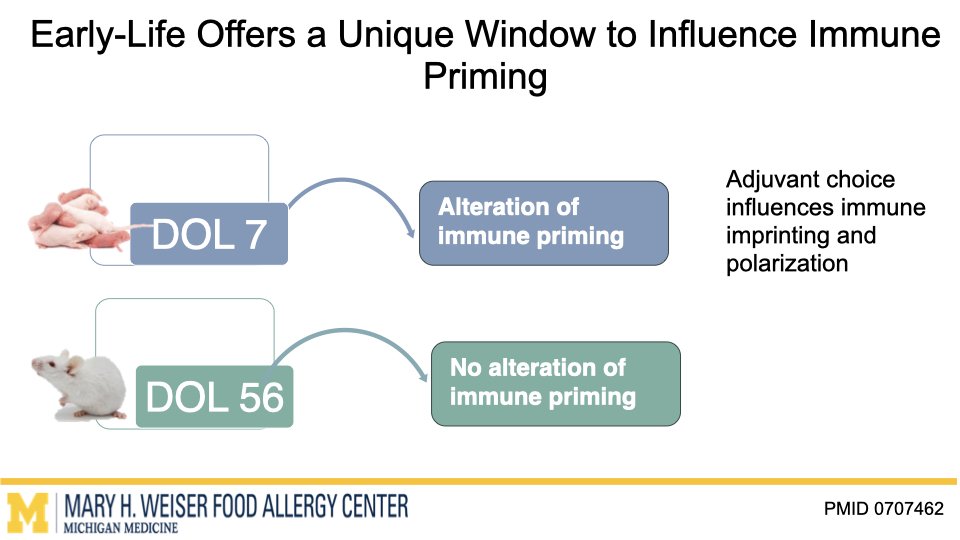
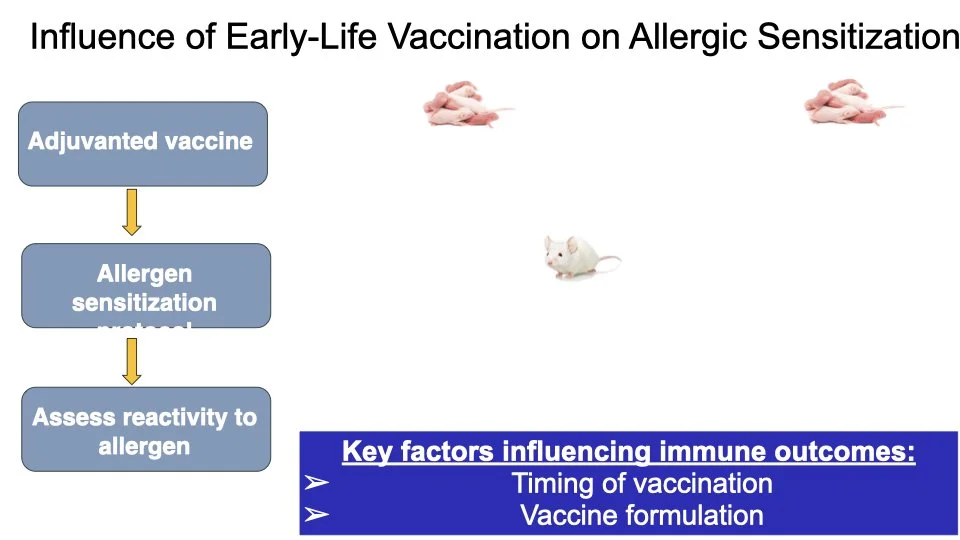
Vaccines are one of the most effective tools to protect human health. Emerging research from our group and others suggests that certain vaccines can do more than help fight infections and may also influence how the immune system responds to other triggers later in life. O’Konek lab is interested in how vaccine components that boost the immune response, commonly called adjuvants, can shape these heterologous effects. We specifically focus on immunization in early life when the immune system is maturing and is most susceptible to instruction. Our preliminary findings presented at the 2025 Food Allergy Fund Summit suggest that both the choice of adjuvant and the timing of vaccination can prevent the development of food allergies in mice. Building on these insights, our overarching goal is to identify strategies for rational vaccine design to promote optimal immune function.
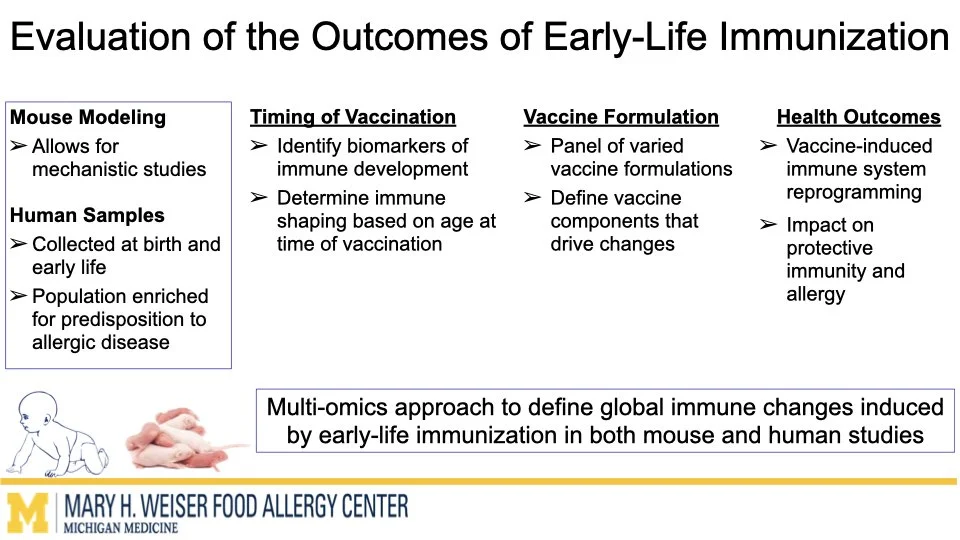
In this project supported by the Food Allergy Fund, we are investigating the differential effects of a panel of diverse vaccine adjuvants across different ages in a mouse model of early-life immunization. By identifying which adjuvants imprint the immune system to alter these broad immune responses, we will select lead candidates for in-depth mechanistic studies, which will utilize a multi-omics approach to examine how and why these changes occur. This stepwise approach will provide vital proof-of-concept data to support future human clinical studies.
This research highlights the importance of understanding vaccines not just as shields against infection but as tools that can help build lifelong health. Ultimately, our work aims to lay the foundation for the design of vaccine strategies that protect from both infectious disease and the growing epidemic of food allergies.
In this project supported by the Food Allergy Fund, we are investigating the differential effects of a panel of diverse vaccine adjuvants across different ages in a mouse model of early-life immunization. By identifying which adjuvants imprint the immune system to alter these broad immune responses, we will select lead candidates for in-depth mechanistic studies, which will utilize a multi-omics approach to examine how and why these changes occur. This stepwise approach will provide vital proof-of-concept data to support future human clinical studies.
This research highlights the importance of understanding vaccines not just as shields against infection but as tools that can help build lifelong health. Ultimately, our work aims to lay the foundation for the design of vaccine strategies that protect from both infectious disease and the growing epidemic of food allergies.