Targeting and Translating the TSLP Pathway for Treatment of Food Allergy and EOE
Funded by Food Allergy Fund
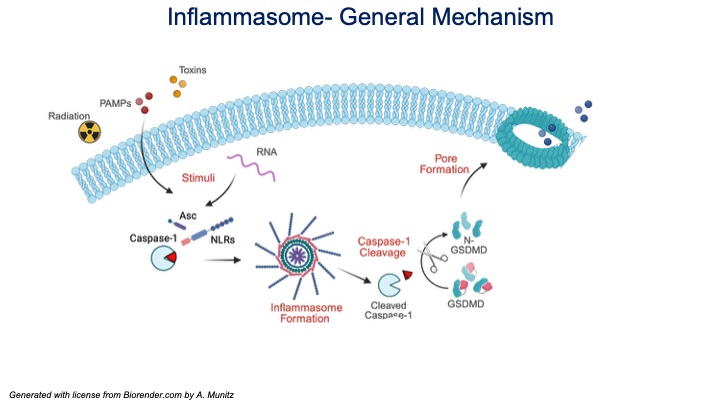
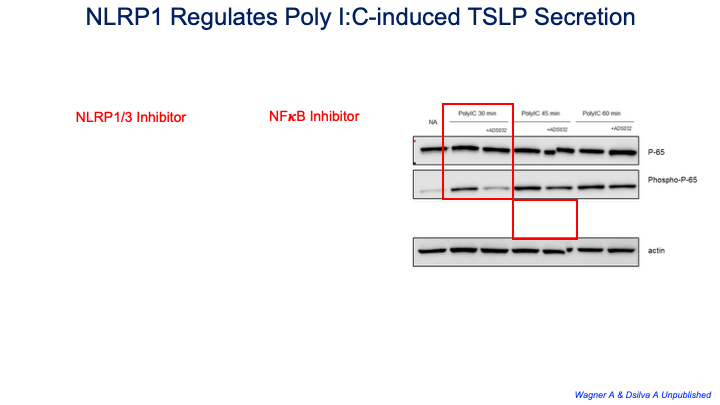
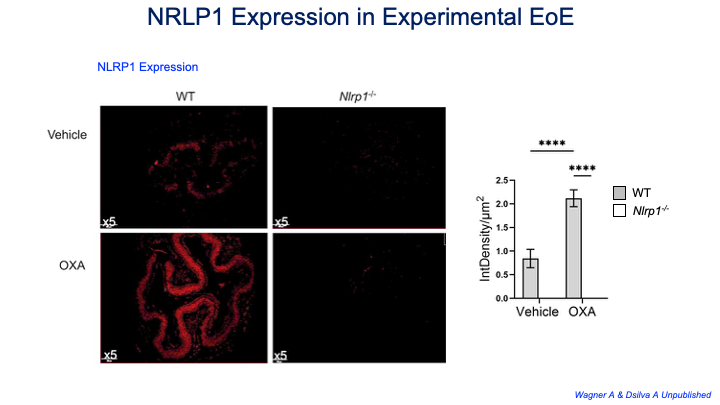
NLRP1 is an intracellular cellular stress sensor that detects viral RNA, metabolic stress, and other epithelial danger signals. Our data show that NLRP1 controls TSLP secretion in intestinal and esophageal epithelial cells. Notably, mice lacking NLRP1 are protected from experimental EoE. Building on these findings, and supported by the Food Allergy Fund, we now pursue three goals. First, we aim to define how NLRP1 activation leads to TSLP release. Second, using mouse models of anaphylaxis and EoE with tissue-specific gene deletion, we aim to determine whether epithelial NLRP1 is required to initiate the immune response that drives food allergies. Third, we will test whether pharmacological blockade of this pathway can prevent or treat disease. These studies aim to uncover a previously unrecognized axis, from epithelial sensing mechanisms via NLRP1 to TSLP secretion as a unifying upstream trigger for food allergy, anaphylaxis, and EoE. This work will lay the foundation for a new generation of targeted therapies for patients living with these conditions.